
ACCD Concept Design Undergraduate Portfolio Program
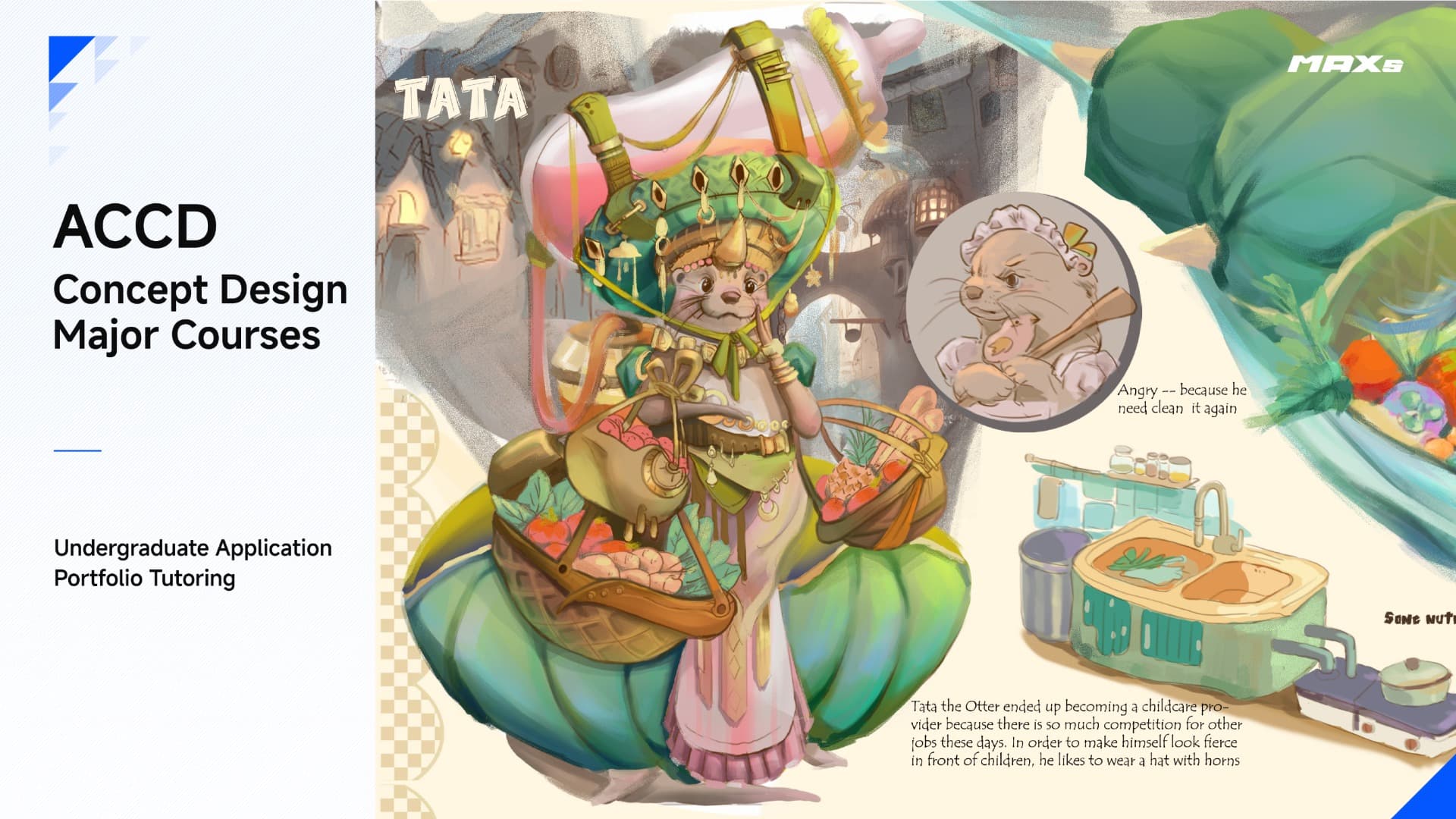
MAXs Academy offers a specialized undergraduate portfolio preparation program for students applying to the Entertainment Design – Concept Design Track at ArtCenter College of Design (ACCD) in the United States.
INSTRUCTORLENGTH36 weeksLEVELOpen to beginnersLESSONS5 chaptersSTARTS—
Syllabus
- 01Program Focus & Career PathwaysConcept design, often referred to in the industry as concept art or 2D game art, goes far beyond creating visually appealing images. Before a fictional world can be brought to life, concept designers define its characters, creatures, architecture, vehicles, props, and environments, ensuring that every element follows a coherent visual and narrative logic. Drawing is the medium, but the core of the discipline lies in transforming an idea into clear, functional designs that can be directly interpreted and developed by 3D modeling, animation, and level design teams. Graduates may pursue careers across five major entertainment sectors: video games, film and television animation, live-action film, theme parks and attractions, and toys and consumer products. Relevant roles include Concept Artist, Visual Development Artist/Designer, Character Designer, Creature Designer, Environment Designer, Prop Designer, Storyboard Artist, Theme Park & Attraction Designer, and Toy Designer.
- 02Primary Target School & Additional Application OptionsArtCenter’s Entertainment Design program offers three specialized tracks: Concept Design, Animation, and Game Design. Concept Design is a dedicated track within the program. Of the 132 units required for the four-year degree, 90 are studio units, reflecting the program’s intensive emphasis on professional art and design training. It is widely regarded within the industry as one of the leading training grounds for entertainment concept design. Located in Pasadena, Los Angeles, ArtCenter’s faculty and industry network include professionals with backgrounds at companies and studios such as Pixar, Disney, DreamWorks, Sony, Riot Games, Blizzard Entertainment, Marvel, and Netflix. With ArtCenter as the primary application target, the same portfolio can also be adapted for applications to institutions including the University of the Arts London (UAL), School of Visual Arts (SVA), Teesside University, Savannah College of Art and Design (SCAD), Ringling College of Art and Design, Otis College of Art and Design, and Laguna College of Art and Design (LCAD).
- 03Program PackagesThe program is offered in two packages based on the student’s application timeline and goals: Comprehensive Portfolio Package (8–10 months): Designed in alignment with ArtCenter’s official portfolio expectations, this package develops a complete 23–25-page portfolio featuring two fully developed story worlds with distinct visual styles. Each world includes four major design categories: characters and creatures, architecture and environments, vehicles, and props. Every design demonstrates three stages of development: research and inspiration, exploratory sketches and design iterations, and final rendering. The portfolio also includes five pages of sketches and six observational figure drawings. - Months 1–3: Complete the first story world - Months 4–6: Complete the second story world - Months 7–9: Portfolio refinement, visual consistency, layout and presentation, Video Essay preparation, and final application packaging The final portfolio includes 16 completed design pieces. Single-Project Package (5 months): This package focuses on developing one complete story world to a highly polished portfolio standard. It is designed for students who have fewer than eight months before their application deadline, are working within a compressed timeline, or would like to complete one project first before deciding whether to continue preparing for the next application cycle.
- 04Instruction & MentorshipBoth packages follow the same instructional structure: - Lead Instructor: One 1-on-1 session per week (1–1.5 hours) to establish creative direction, design standards, and project expectations. - Portfolio Development Instructor: 2–3 hours of weekly individual feedback and revision support, with detailed critiques provided for each portfolio piece. - Program Coordinator: Monthly progress updates and reviews with both the student and parents. All classes are screen-recorded in full, and a written course report is provided after each session. Each project also includes a mid-project evaluation milestone. Every design piece is reviewed and approved through four production stages: sketch variations, refined line art, color variations, and final rendering. Tuition is structured according to defined deliverable milestones. Students are expected to maintain a consistent commitment of approximately 12 hours of independent work per week outside of class.